01The main features of the report
This audit report, prepared by a team of committed experts and researchers, focuses on four aspects of the country's socio-political landscape that are most deeply linked with social injustice and poverty. It was produced by the Institute for Policy Studies, with a large number of co-authors and co-editors, and runs to around 120 pages.
Systemic Racism
Discrimination that is not only still present, but growing.
Poverty & Inequality
Wealth concentrated at the top while wages stagnate.
The War Economy & Militarism
How a culture of militarism feeds social injustice.
Ecological Devastation
Environmental harm that falls hardest on the poor.
Co-authors: Sarah Anderson, Marc Bayard, Phyllis Bennis, John Cavanagh, Karen Dolan, Lindsay Koshgarian, Aaron Noffke, Sam Pizzigati, Saurav Sarkar, Basav Sen and Ebony Slaughter-Johnson.
Co-editors: Saurav Sarkar (Institute for Policy Studies) and Shailly Gupta Barnes (Kairos Center for Religions, Rights and Social Justice), with Aaron Noffke (Institute for Policy Studies) serving as assistant editor.
The report opens with a foreword, executive summary and introduction, followed by chapters on the four main topics — in the order of Systemic Racism, Poverty and Inequality, The War Economy and Militarism, and Ecological Devastation. These are followed by the conclusion, appendices 1 and 2, and finally the acknowledgements.
02Systemic racism
For anyone who thinks racism belongs to the past in the United States, this report serves as a wake-up call — if not a blaring alarm to rouse them from their stupor. Its findings show that discrimination, in one form or another, is not just still present but growing.
The statistics tell a frightening tale. One of the most alarming is that one in 13 African-Americans is disenfranchised due to felony convictions — and that is just the tip of the iceberg. Overall, the number of people disenfranchised for this reason has tripled since 1968, with a major share of them being African-American.
And it is not only the Black community that is suffering: 66% of the people in jails belong to racial minorities, even though their share of the population is just 39%.
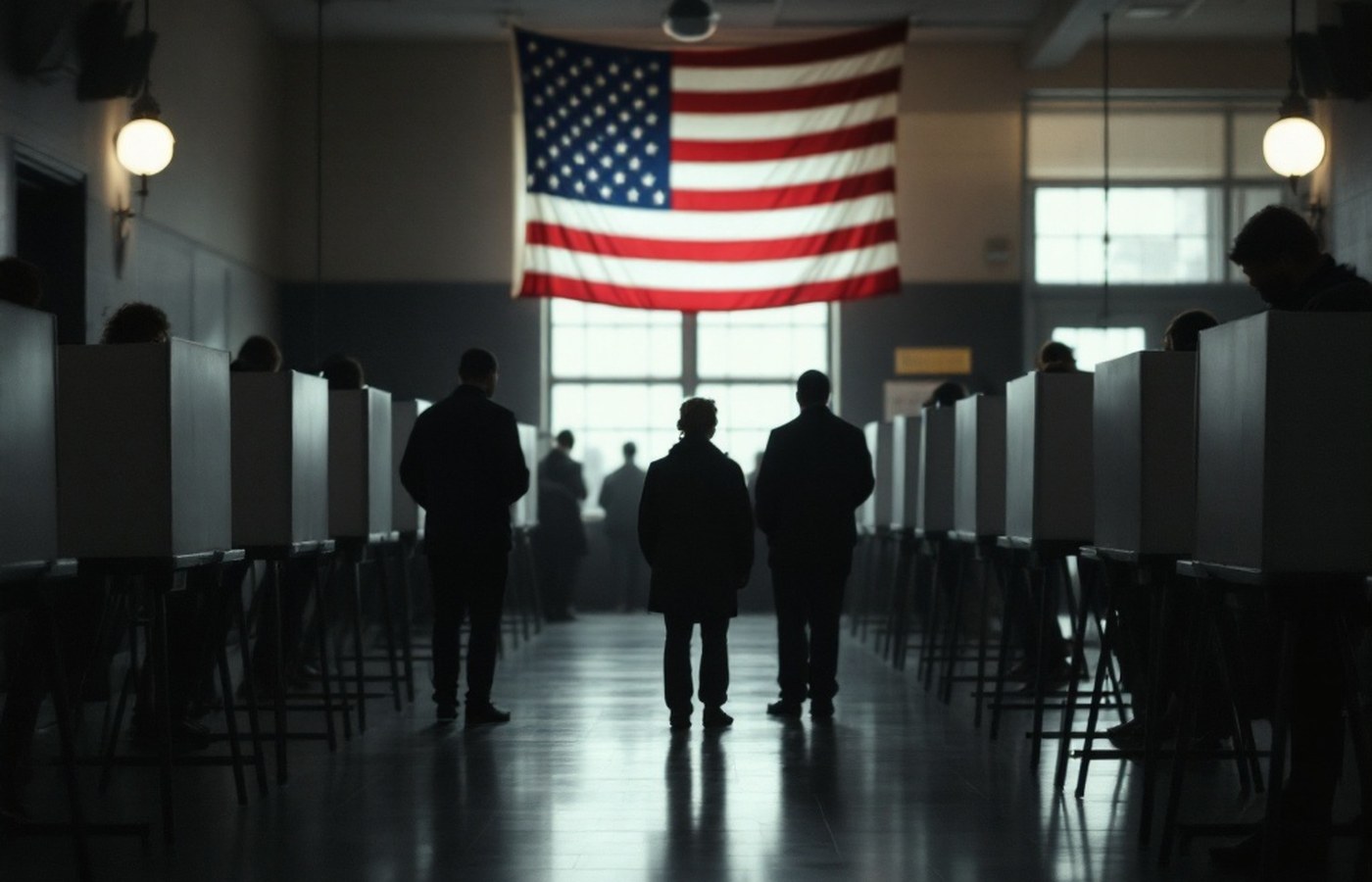
Even more threatening to the democratic principles of the country are the laws that prevent people of colour from casting their vote through indirect means. The report states that 23 states have passed laws that prevent a good number of people — especially those of colour — from exercising their right to the ballot. These voter-suppression laws have come into effect since 2010, and are another example of the flaws in the country's democratic system.
03Poverty
It has been sufficiently recognised that poverty and racism are inextricably linked — which is precisely why poverty was something Dr King paid special attention to throughout his career as an activist.
- 43.5% of people in the country are either poor or low-income.
- The 400 richest Americans collectively own more wealth than the 64 million poorest people in the country.
- Hourly compensation has risen only about 12% since 1973, while productivity in the same period grew by roughly 73%.
04Militarism
The chapter on the war economy sheds light on how the culture of militarism also contributes to social injustice. It points out that the CEOs of the five biggest military contractors earn $19.2 million on average — some 90 times the salary of a general. It also tackles the neglect of veterans and the poor conditions endured by young soldiers, among whom suicide has become a major cause of death.
05Ecological devastation
Lastly, the report turns to ecological devastation, revealing that there have been thousands of gas and oil leaks in the last few years, much to the detriment of the environment.
It also highlights the excessive emissions from the Department of Defense, and the increasing cost of water for the poorest sections of society.